Consultation
Dr. Miller reviews your history, medications, and goals, and confirms candidacy for Exomind TMS therapy.
Exomind, Drug-Free Relief
A Different Approach for Lasting Relief
Many adults in Venice and across Sarasota County have tried one, two, or more antidepressants and still struggle with low mood, flat energy, poor sleep, and the quiet sense that nothing is working. Side effects like weight gain, sexual dysfunction, emotional blunting, and brain fog can feel as heavy as the depression itself. For patients with treatment-resistant depression, the cycle of switching medications, waiting weeks, and feeling no better is exhausting, and it often pulls family, work, and self-confidence down with it.
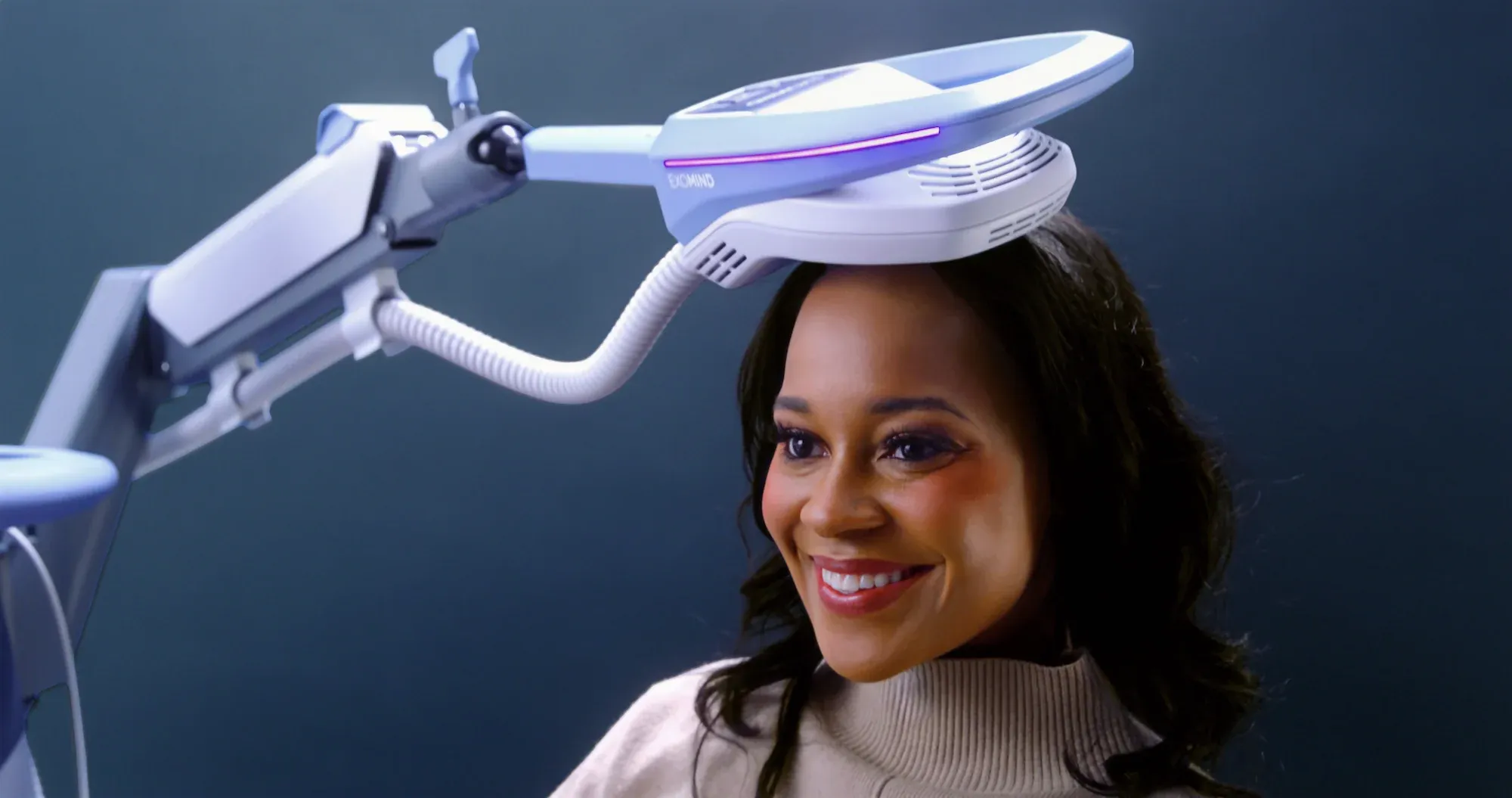
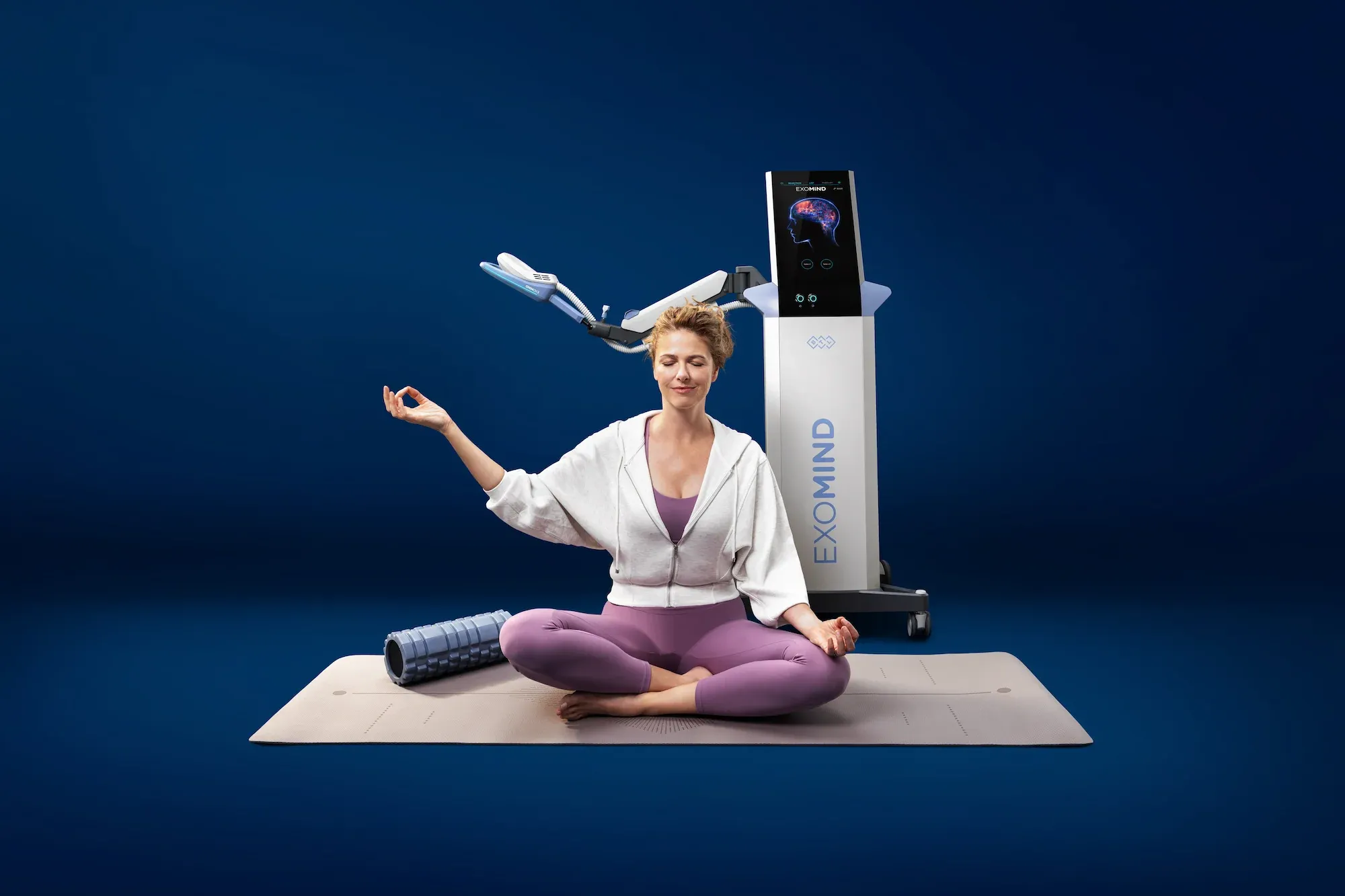
TMS therapy in Venice, FL offers a different path. The Exomind device uses targeted magnetic pulses to gently stimulate the prefrontal cortex, the brain region most involved in mood regulation. Sessions are performed in our office while you sit awake and relaxed, no sedation, no needles, no medication in your bloodstream. Most patients complete treatment during a lunch break and drive themselves home. For many adults who felt stuck, TMS delivers measurable, durable improvement in depression symptoms.

Transcranial Magnetic Stimulation
TMS therapy, or transcranial magnetic stimulation, is a non-invasive brain stimulation treatment that uses focused magnetic pulses to activate under-functioning circuits in the brain. The FDA has cleared TMS for depression and OCD, and Exomind is a modern TMS system engineered for patient comfort, precise targeting, and efficient session times.
During a session, a small coil rests against the scalp above the left prefrontal cortex. The coil delivers rapid magnetic pulses that pass painlessly through the skull and induce small electrical currents in the underlying brain tissue. Over a course of daily treatments, these pulses help restore healthy activity in mood-regulating circuits, a mechanism described in the NIH literature on transcranial magnetic stimulation for depression. Because the effect is focal and the magnetic energy does not circulate through the body, patients avoid the systemic side effects common with antidepressant medication.
TMS is often the next step for adults who have tried Primary Care, medication management for depression without full relief, and it pairs well with therapy. If your primary concern is low mood, loss of interest, or persistent sadness, see our Depression Treatment page for how this service fits into whole-person care.

Effective, Gentle, Durable

Cleared by the FDA for major depression and OCD.
No sedation, no anesthesia, no surgery, and no needles.
Works without adding another medication to your regimen.
Avoids weight gain, sexual dysfunction, and brain fog.
Many patients experience benefits that last months or longer.
Often covered for treatment-resistant depression with prior medication trials.
How Treatments Compare
| Treatment | Mechanism | Session Time | Results Timeline | Duration of Benefit | Downtime | Best For |
|---|---|---|---|---|---|---|
| Exomind TMS Therapy | Focal magnetic stimulation of mood circuits | 20-40 minutes | 2-4 weeks to notice improvement | Months, often longer with maintenance | None, drive yourself home | Treatment-resistant depression, OCD, medication side-effect intolerance |
| SSRIs (antidepressants) | Systemic serotonin and neurotransmitter modulation | Daily pill | 4-8 weeks to assess response | While taken, tapering required to stop | Possible side effects: weight gain, sexual, fatigue | First-line treatment for moderate depression |
| ECT (electroconvulsive therapy) | Generalized electrical stimulation under anesthesia | Procedure plus recovery, hours total | Days to weeks, often rapid | Requires ongoing maintenance sessions | Requires anesthesia and recovery time | Severe, catatonic, or urgent life-threatening depression |

Honest Guidance on Fit and Safety
TMS therapy is most often recommended for adults with depression who have tried at least one or two antidepressant medications without adequate relief, or who cannot tolerate medication side effects. According to the NIMH Depression Overview, roughly one in three adults with major depression does not fully respond to a first-line antidepressant, and TMS offers a non-drug option when that happens. Candidacy is always confirmed during a one-on-one consultation with Dr. Miller.
If you are not sure whether TMS is appropriate for you, call our Venice office and our team will schedule a brief consultation to review your history and medications before committing to a course of treatment.
Dr. Miller reviews your history, medications, and goals, and confirms candidacy for Exomind TMS therapy.
Pamela Miller calibrates the Exomind coil to your unique motor threshold for precise, individualized targeting.
You sit awake in a chair while the Exomind device delivers targeted magnetic pulses for 20-40 minutes.
Dr. Miller reviews mood scales and symptom changes weekly and adjusts the protocol as needed.
After the core course, Dr. Miller outlines follow-up, maintenance sessions, and primary care coordination.

What to Know
Exomind TMS therapy is considered a very safe, non-invasive treatment when performed by a qualified clinician. Because the magnetic pulses act only on a focused region of the brain and do not circulate through the body, TMS avoids the systemic side effects that often come with oral antidepressants. Most patients complete the full course with only mild, short-lived discomfort.
The most common side effects include scalp discomfort or tapping sensation at the coil site, mild headache during or after the first few sessions, and brief lightheadedness when standing up. These symptoms typically ease within a few sessions as you acclimate to treatment, and over-the-counter pain relief is usually all that is needed. The most serious theoretical risk is a treatment-induced seizure, which is rare when standard screening and safety protocols are followed.
Dr. Miller reviews every patient for seizure risk, metal implants, and medication interactions before starting, consistent with the clinical safety guidance from the NIH on transcranial magnetic stimulation. Call our Venice office promptly if you experience worsening depression, suicidal thoughts, severe headache, or any symptom that does not feel right. Dr. Miller is reachable directly through our office for any question during or after your TMS course.
For adults with treatment-resistant depression, TMS therapy is often covered by commercial insurance and Medicare when criteria are met. Most payers require documentation of a diagnosis of major depressive disorder and at least 2 failed medication trials at adequate dose and duration, as well as a trial of psychotherapy. Our Venice team helps assemble this documentation before your course begins so there are no surprises.
For patients who prefer to self-pay, or whose insurance does not cover TMS, Paradise Family Healthcare offers transparent cash pricing for Exomind TMS therapy sessions.
Total cost depends on the protocol Dr. Miller recommends, whether your plan includes 20 daily sessions or a longer 36-session course, and whether maintenance sessions are added. Our front office reviews your benefits and estimated patient responsibility in writing before treatment begins.
To confirm your coverage, call our Venice office at (941) 488-2332 and our team will verify insurance benefits, medication trial history, and expected out-of-pocket costs before your first session.

A Local Team That Knows You
Dr. Miller designs and reviews every TMS therapy course personally.
Seamless coordination with medication, labs, and chronic disease care.
Modern TMS system focused on comfort, precision, and session efficiency.
Calls answered in-office and sessions scheduled around your life in Venice.
Answers from Dr. Miller
TMS stands for transcranial magnetic stimulation. A small coil rests on your scalp and delivers focused magnetic pulses that gently stimulate under-active areas of the prefrontal cortex involved in mood. Over a course of daily sessions with Exomind, these pulses help restore healthy brain circuit activity and relieve depression.
Exomind TMS therapy is FDA cleared for major depressive disorder and OCD, and it is commonly used for treatment-resistant depression and depression with co-occurring anxiety. Dr. Miller confirms whether TMS is the right option for your diagnosis during your initial consultation in Venice.
A standard course is 20 to 36 sessions, typically 5 days per week for 4 to 6 weeks. Each session lasts 20 to 40 minutes. Some patients benefit from occasional maintenance sessions after the core course, and Dr. Miller personalizes the schedule based on your response.
Most patients describe TMS as a tapping or knocking sensation on the scalp rather than pain. Mild scalp discomfort or a light headache is common during the first few sessions and usually fades quickly. You remain fully awake, alert, and able to drive yourself home.
Antidepressants work systemically and can cause side effects such as weight gain, sexual dysfunction, or fatigue. TMS acts only on focused brain circuits and avoids those systemic effects. For patients who have not responded to 2 or more medications, studies show TMS is an effective option that many tolerate more comfortably.
Most commercial insurance plans and Medicare cover TMS therapy for treatment-resistant depression when coverage criteria are met, typically documentation of at least 2 failed antidepressant trials. Our Venice office verifies your benefits and medication history in advance so you know your expected responsibility before starting.